
Bridging the Gap
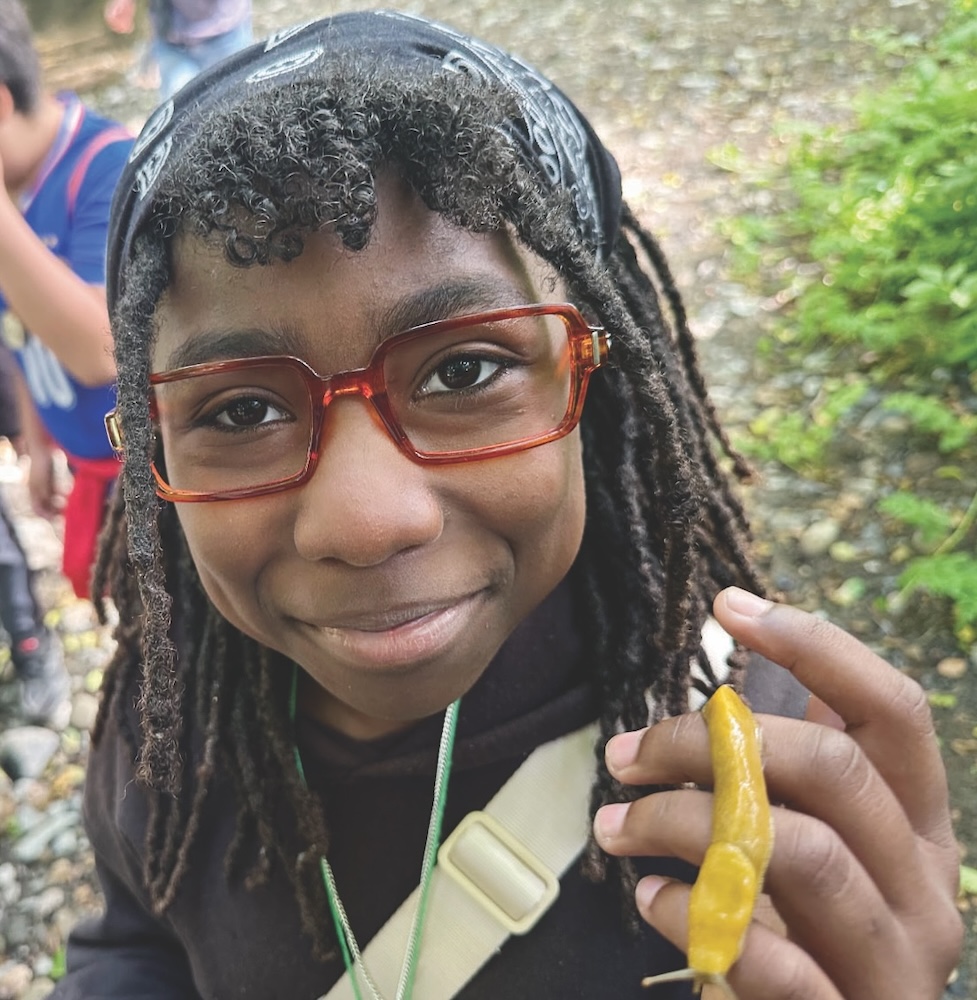
The banana slug moves silently across the forest floor, a strange but welcoming ambassador to the redwood cathedral above. For the fourth-grader crouched beside it, this yellow mollusk represents something powerful: a willingness to try new things.
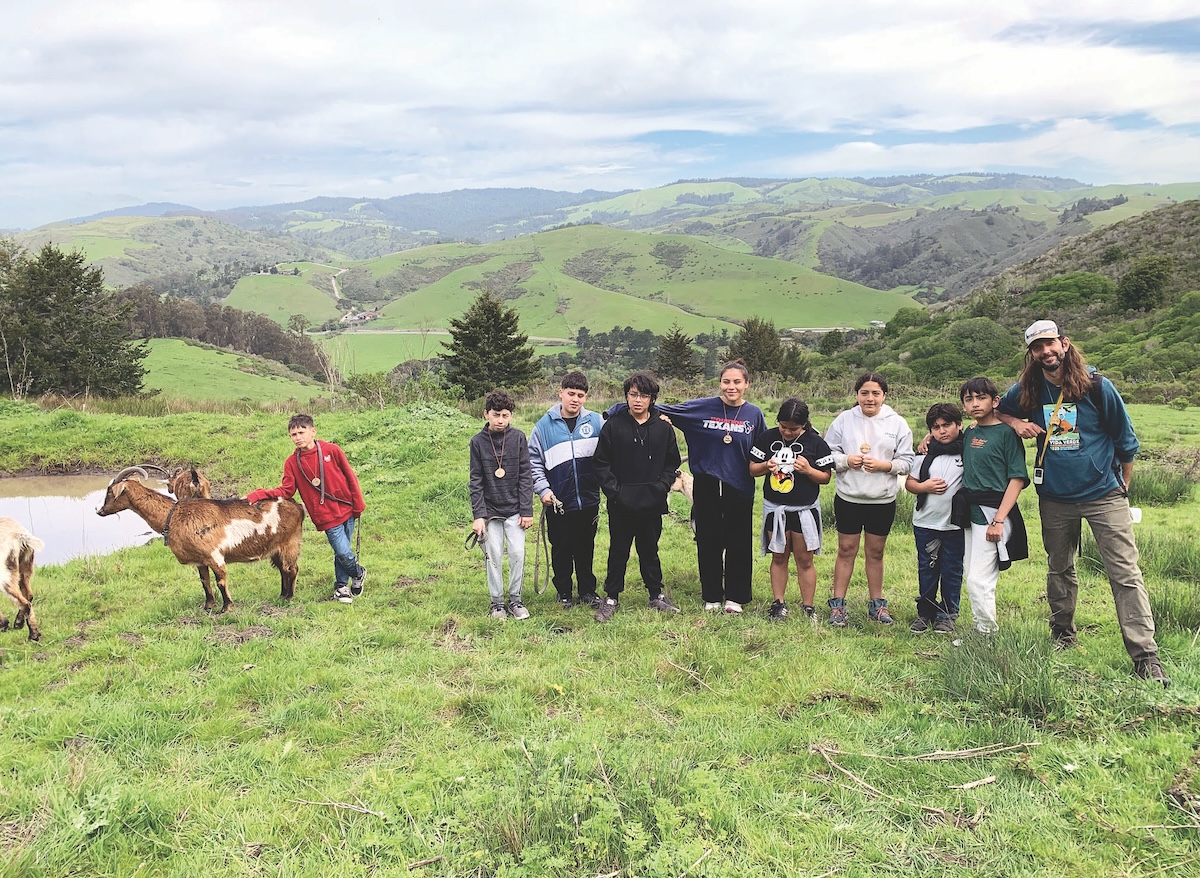
Despite their close physical proximity to the natural world, thousands of children in the Bay Area have never experienced the misty peace of a redwood grove, nor slipped off their shoes to run in the sand and climb gingerly around the tidepools. Research shows that time spent in nature has a positive impact on mental and physical well-being, and contributes to the academic achievement, self-confidence, and emotional regulation of children. Unfortunately, not all children can access the outdoors in the same way.
Since 2001, Vida Verde has bridged the gap for students who face systemic barriers to spending time in the natural world and to accessing the benefits of being outside. Vida Verde is the only Bay Area outdoor education program serving exclusively low-income schools – those with 85% or more of students qualify for free lunch. The free three-day/two-night program serves more than 700 students annually, with 99% of students identifying as people of color and many children coming from immigrant families. The children travel from Oakland, San Francisco, Richmond, East Palo Alto – communities where children often live in dense urban neighborhoods.
Vida Verde’s mission is to promote educational equity in the outdoors, and every aspect of the program is designed to capitalize on the linguistic and cultural wealth of students. The strengths that students bring to camp are used as a springboard to help them become successful in a new environment, with trust, community building, high expectations, and encouragement acting as cornerstones of the program. The impact is immediate and extends well beyond camp, with teacher surveys reporting improved academic achievement and increases in positivity, teamwork, empathy, and new connections to the natural world.
During the summer, teens are invited back to Vida Verde to revisit the programming from their childhood, and spend a week on-site exploring their interests and learning how to advocate for the natural world, and to lead change. The program also creates pipelines for former campers to return as counselors and, after college, to apply for positions on the program staff team. In this way, Vida Verde is not only bridging the gap for young children, ensuring access to the natural world, but also providing long-term solutions related to college and career readiness.
Vida Verde
Donate now!www.Vveducation.org
(650) 747-9288
Development Director: Jessica Kahlman
Mission
To promote educational equity by providing free, overnight environmental learning experiences for students who don’t otherwise get the opportunity.
Begin to Build a Relationship
We know you care about where your money goes and how it is used. Connect with this organization’s leadership in order to begin to build this important relationship. Your email will be sent directly to this organization’s Director of Development and/or Executive Director.
Students explore the natural wonders of the Redwoods and the coast while expanding their understanding of themselves and their capabilities. They face their fears (walking alone in the woods, facing waves of the ocean, or going on a night hike) with the support of their peers and program instructors. A three-day trip that provides mindsets and memories that will impact their futures.
Electrify Vida Verde With the Power of the Sun
Vida Verde hopes to raise $350,000 to buy and install solar panels for a solar array that would power its entire 23-acre San Gregorio property, including its working farm and new educational barn.
The solar array would enable the property to go entirely solar, running lights, water pumps, heat, and even multiple electric buses that will shuttle the students from site to site.
Going solar “aligns with our teachings around taking care of the environment,” Jessica Kahlman, Vida Verde’s development director, says. “It’s important for us to be models for students and the larger community around sustainability.”
Key Supporters
The David & Lucile Packard Foundation
The California Coastal Commission
Midpeninsula Regional Open Space District
The Franklin & Catherine Johnson Foundation
Additionally, individual supporters make up approximately 25% of our funds raised for our entirely free programming.