The Vital Safety Net You Rarely Hear About
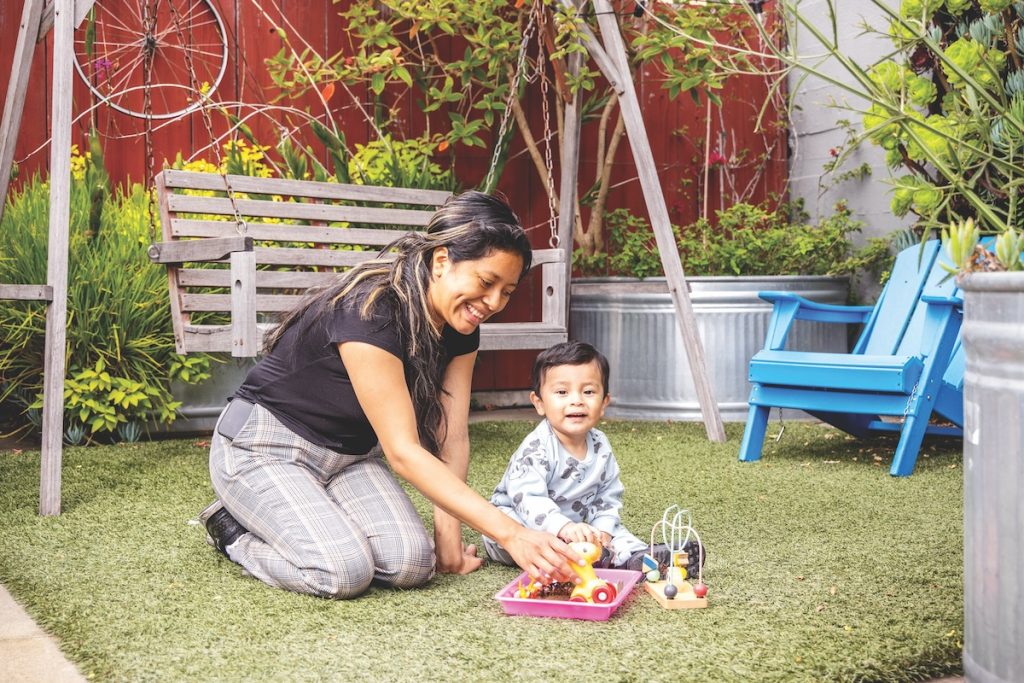
One mother told Help a Mother Out that she had started giving her baby less to drink. Less water, less formula, less juice. Fewer wet diapers meant fewer changes, and fewer changes meant the pack in the closet lasted until Friday.
That is what running out looks like. Not a headline, but a calculation a mother runs at her kitchen counter alone, and tells almost no one.
Babies go through six to 10 diapers a day. At retail that is $90 to $135 a month. SNAP does not cover diapers. Neither does WIC. Neither does Medicaid.
“I believe it is just an omission in the safety net that is coming to light after decades of unawareness,” says Founder and Executive Director Lisa Truong. “But struggling parents have obviously known.” And so has the nonprofit Help a Mother Out.
The Ripple Effect of No Diapers
When babies do not have diapers, the effects ripple outward. Most childcare centers require parents to send a full, consistent supply of diapers, so a parent who cannot send diapers cannot send the child, and a parent without childcare cannot take their work shift, finish their training program, or attend class. The baby misses the playgroup and the early-learning hours when brain development moves fastest.
Mothers skip meals to buy diapers. “No family should have to choose between diapers or dinner,” Truong says. Diaper need has been tied in research to higher rates of maternal depression, and Truong understands why: when you cannot cover your baby’s most basic need, you do not feel like a capable parent.
None of this is visible from the street. Social workers have told Help a Mother Out that mothers are afraid to ask, because telling the person who holds your file that you cannot afford diapers can feel like handing over a reason to take your child. One mother in East Oakland told the
organization: “You have no idea what these diapers mean to me. If I didn’t have these diapers, I would probably be out on the street selling my body to support my child.”
The Need Keeps Growing
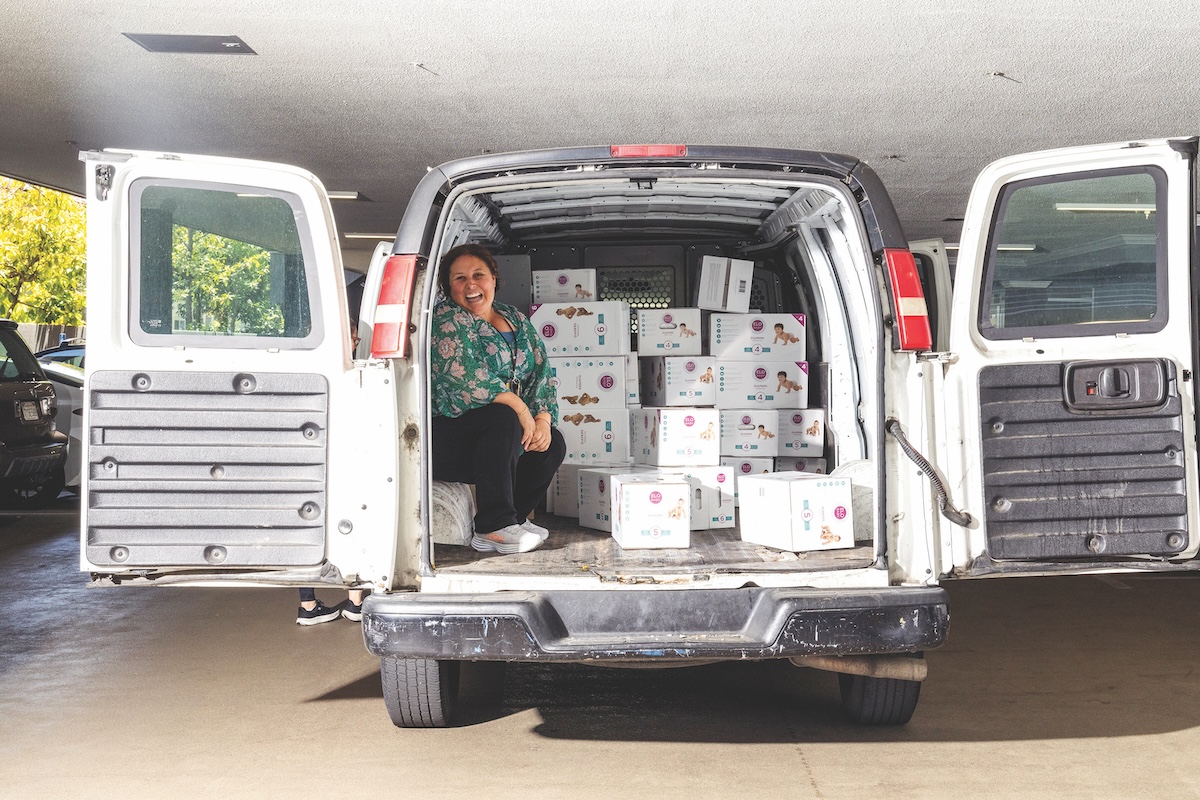
Truong started Help a Mother Out in 2009, after seeing an Oprah episode about families made homeless by the recession, with a Mother’s Day drive that asked friends for diapers instead of flowers. It brought in 15,000. Seventeen years later, three to four 52-foot truckloads pull into an East Oakland warehouse every month and pallets move out to more than 60 partner organizations, among them Alameda County Public Health, Stanford Medicine’s Diapers at the Doctor program and the Homeless Prenatal Program in San Francisco. The running total is more than 85 million diapers, 70 million of those distributed since 2019.
Since 2019 they have carried the organization’s own label, ELO Baby, bought direct from a manufacturer that also makes nationally recognized brands. Help a Mother Out believes every family deserves high-quality diapers for their babies, and their house brand is independently lab-tested and available in a full range of sizes.
Help a Mother Out does not hand diapers to families itself. Instead, it stocks the places families already go: pediatric clinics, public health departments, food pantries, family resource centers.
“We want to provide families in need with resources. But often it is, ‘Go to this place,’ or ‘Call this phone number,’” says Dr. Janine Bruce, co-director of the Pediatric Advocacy Program at Stanford School of Medicine. “So to be able to provide the diapers when they come to the clinic is really ideal for us.”
Last fiscal year Stanford’s program moved 481,196 diapers. Alameda Health System moved nearly 393,000. The Homeless Prenatal Program moved close to 279,000.
And yet, it is still nowhere near enough. Roughly 50,000 Bay Area children under three live in households below the California Poverty Measure. Help a Mother Out reaches about 7,500 a month. Recent reductions in government funding have made the gap harder to close, even as the number of families who need help keeps growing.
The plan is to strive to meet those expanding needs anyway: double the annual distribution to 20 million diapers and deepen their footprint in San Mateo and Santa Clara counties, where poverty sits quietly behind the region’s wealth.
One case holds about 120 diapers, depending on size. “Every case of diapers that reaches a family means a life has been changed,” she says.
Help a Mother Out
Donate now!www.helpamotherout.org
Founder and Executive Director: Lisa Truong
(415) 508-3710
Mission
Help a Mother Out® works to improve baby and family well being by increasing access to diapers for families in need.
A family’s access to a reliable supply of clean diapers reduces the risk of infectious disease outbreaks, improves baby’s health and comfort, and enables baby’s participation in early care and education programs. Our vision is a day when every baby has a healthy supply of diapers.
Begin to Build a Relationship
We know you care about where your money goes and how it is used. Connect with this organization’s leadership in order to begin to build this important relationship. Your email will be sent directly to this organization’s Director of Development and/or Executive Director.
My family delivers diapers to a homeless shelter. Then I spotted Help a Mother Out in The Giving List. HAMO is doing it at scale across the Bay Area – what a find! Now I’m on the Board, and so proud of our impact. Businesses aren’t the only ones who can scale.
A Solvable Problem
A dollar a day keeps a baby in clean diapers, and every dollar spent on diaper access returns two in health care savings. No federal program will spend it. Donors do.
• $1,000 – Funds a month of clean diapers for 30 babies
• $5,000 – Restocks a partner agency’s emergency diaper pantry
• $10,000 – Sends 60,000 diapers to Bay Area families through clinics and pantries they already visit
• $50,000 – Stocks a big rig’s worth of diapers for partners
Key Supporters
The Help a Mother Out Board:
Annie Bercovich Myers, Chair
Meghan Crowell, Vice Chair
Mitra Rezvan, Treasurer
Claudia Ceseña, Secretary
Denise Bethel
Juno Duenas
Dan Kelly
Nicole Magaddino
Ashley Martin-Golis
Sari McConnell
Swati Pande