
Better Data, Better Care: Information that drives our mission
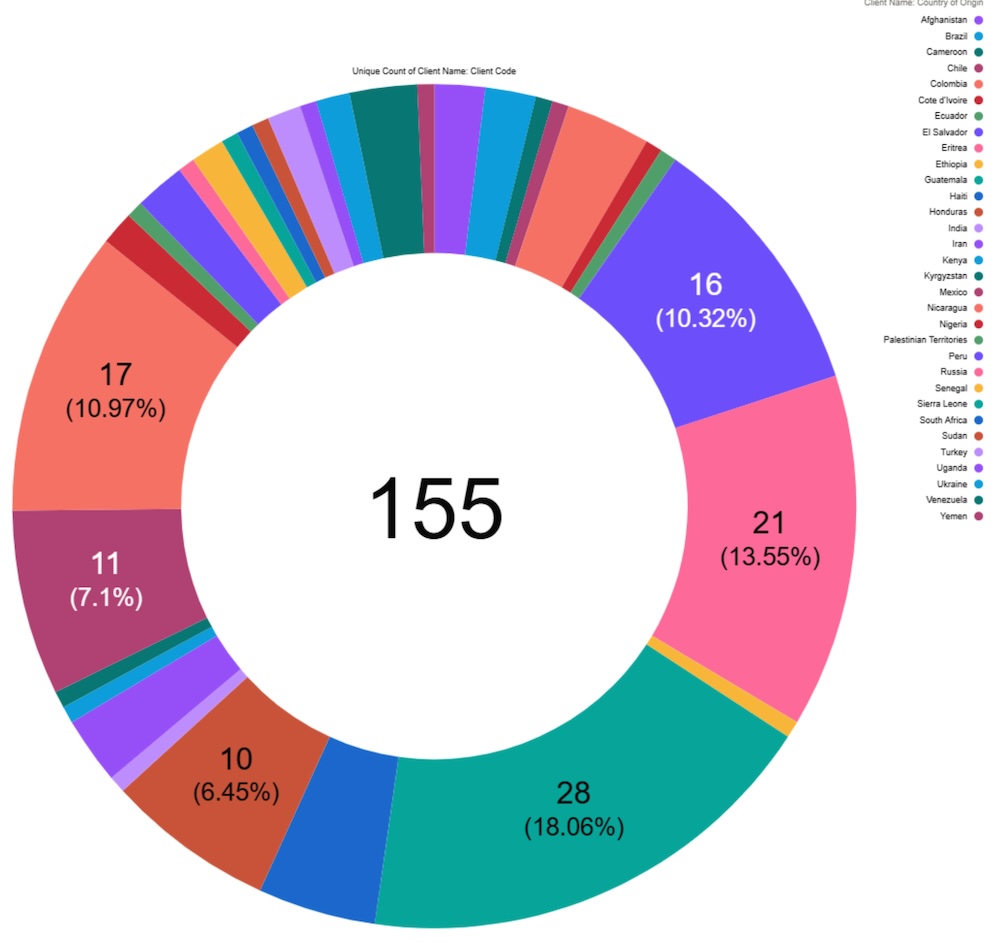
Partnerships for Trauma Recovery has been serving the psychosocial needs to Refugees and Asylum Seekers in the Bay Area for 10 years this fall. Annually, the opportunity to reflect on the clients we serve helps shape the support that we offer.
In 2024, PTR saw 155 unique clients in either a therapeutic or case management setting. Spanning over 30 different countries, we have been able to grow our global reach within the multicultural community of the Bay Area with our inclusive service model.
The largest segment of our clients (18%) comes from Guatemala, followed by Eritrea with 14%, Nicaragua with 11% and El Salvadorwith 10% of clients, indicating a few concentrated communities alongside a broad representation of other nationalities. This level of diversity underscores our commitment to providing services that are culturally responsive, linguistically accessible, and globally relevant.
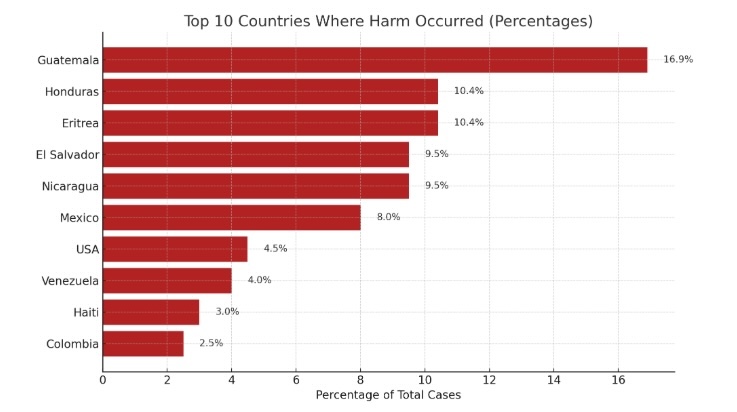
Top 10 Countries where clients report harm occurring:
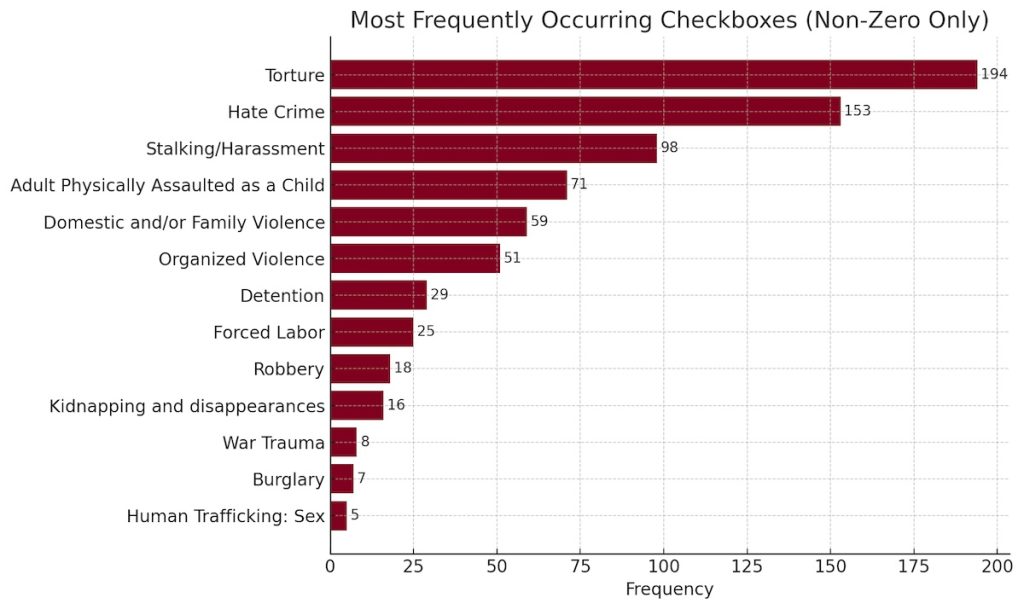
Type of Harm experienced by our clients categorized by number of occurrences:
Perpetrators of Harm:
Our 2024 data revealed that family members, community members, and government representatives together account for a significant portion of reported cases, emphasizing the complexity of addressing violence that is both interpersonal and systemic.
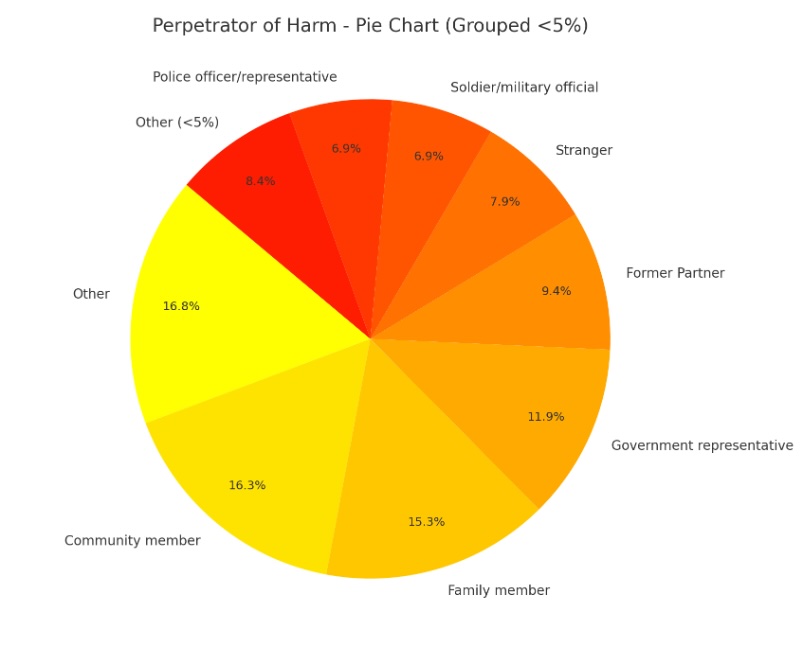
While strangers and partners also appear in the data, the prevalence of harm caused by authorities and representatives of power structures – including police, military, and government officials—shows the urgent need for advocacy, accountability, and survivor-centered support.
This international client mix underlines PTR’s ability to engage and support multicultural populations. Support for our programs allows us to deepen our outreach and strengthen our wraparound services, helping people from around the world access stability, opportunity, and support in their new environments.
Our data reveal that the majority of our clients first experienced torture during early adulthood, with 53.3% between the ages of 18 and 44. A significant portion, 31.47%, were between 5 and 17 years old, highlighting the devastating impact of violence on children and adolescents. Additionally, 12.69% of survivors were under the age of 5 at the time of their trauma, while 2.5% experienced torture between 45 and 64 years old. These figures demonstrate the profound and lifelong effects of torture across all stages of life, particularly among young people whose formative years were marked by violence and persecution.
Languages Spoken
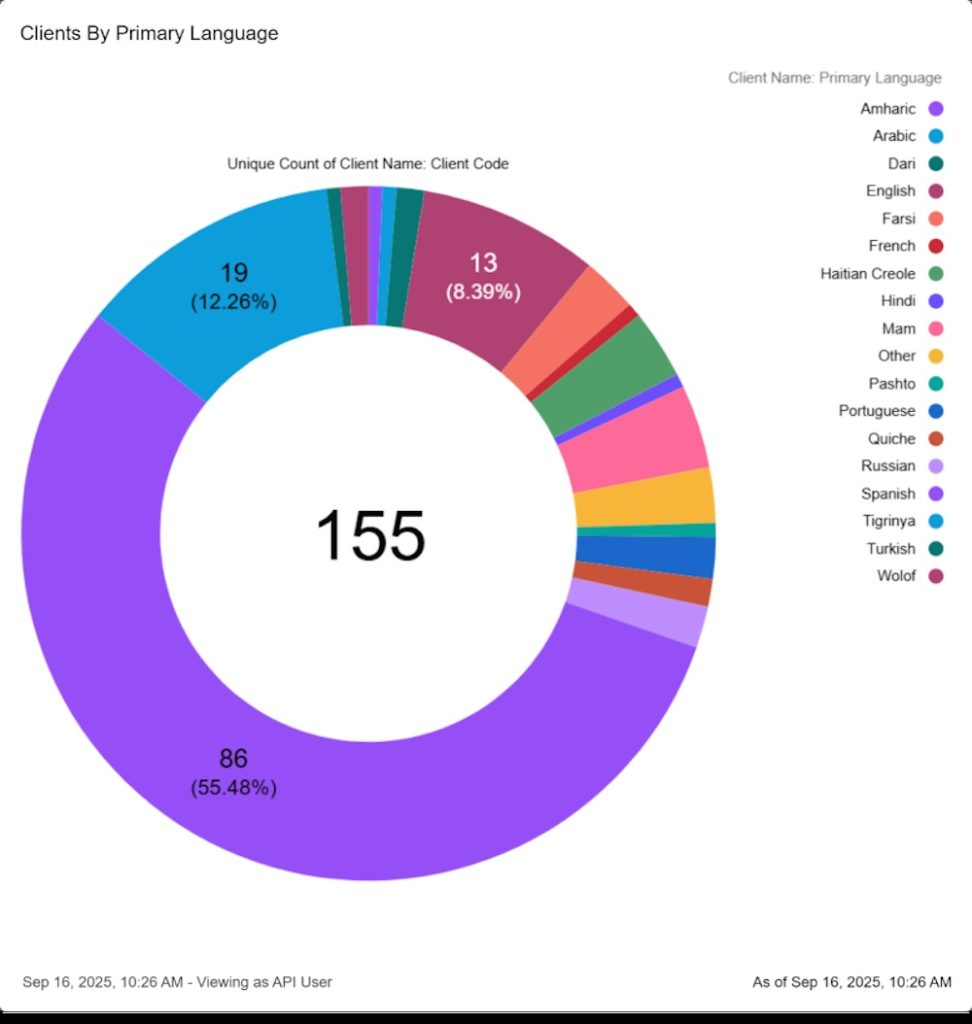
In 2024, our clients spoke more than 15 primary languages, reflecting the multilingual reality of today’s immigrant and refugee populations.
Over half of our clients (55.48%) identify Spanish as their primary language. The next largest language groups include Tigrinya (12.26%), and English (8.39%), followed by smaller but significant populations speaking Haitian Creole, Arabic, Mam, and Russian, among others.
This rich linguistic landscape underlines the critical importance of language-accessible services. Whether it’s interpretation support, translated materials, or culturally competent programming, we are committed to meeting clients where they are in their language, culture, and lived experience.
This data demonstrates not only who we serve, but also the scale of need for resources that support multilingual service delivery. Our services ensure that no one is left behind due to language barriers, allowing our clients to access housing, employment, healthcare, and education with confidence and clarity.
Together, these data points illustrate more than numbers — they tell the story of courage, complexity, and resilience that defines PTR’s work. Every statistic represents a person reclaiming safety, voice, and hope after unimaginable trauma. As PTR enters its second decade, we remain deeply committed to using data not just to measure outcomes, but to drive understanding, equity, and systemic change. Our funders’ investment strengthens our ability to capture and share data that reflects survivors’ lived experiences, ensuring that their needs continue to shape the future of trauma recovery — in our community and beyond.
Join us as we continue to awaken hope — one healing journey at a time.
Partnerships for Trauma Recovery
Donate now!traumapartners.org
Executive Director: Gianina Pellegrini, Ph.D.
(510) 230-7474
Mission
To address the psychosocial impacts of trauma among international survivors of human rights abuses through culturally aware, trauma-informed, and linguistically accessible mental health care and case management, community outreach, clinical training, and policy advocacy.
Begin to Build a Relationship
We know you care about where your money goes and how it is used. Connect with this organization’s leadership in order to begin to build this important relationship. Your email will be sent directly to this organization’s Director of Development and/or Executive Director.
Thank you for working hard and striving on my behalf. I am able to work now and I have learned a lot. If I could do more to express my gratitude, I would. Thank you… You carried my worries like they were yours without complaining and helped me to get where I am. My asylum case has been approved. Thank you, thank you, thank you!
Help Support Emotional Well-Being for Victims of Human Rights Abuses
Trauma recovery is possible. $50,000 provides 10 survivors of torture culturally reflective, trauma-informed, and linguistically accessible mental health care and case management essential for healing. By improving well-being, the ability to engage in daily activities, and a sense of safety, holistic treatment leads to thriving.
A torture survivor from the Middle East expressed, “[PTR is] a center that allows doubt and suffering that you have internally to go away, and helps you fit into society. Without their support, I don’t know if I would be here now . . . It helped me survive. It’s given me a second life, and the opportunity to be alive.”
Key Supporters
Annika Sridharan (Co-Founder)
Monika Parikh (Co-Founder)
Akawak Ejigu (Board Member)
Alexander Cook (Board Member)
Ana Gamez (Board Member)
Catherine Chen (Board Chair)
Gauri Bhardwaj (Board Treasurer)
Hillary Pollaro (Board Co-Chair)
Joseph Asunka (Board Member)
Julianne Orr (Board Secretary)
Stephanie Wu (Board Member)
Kaiser Foundation
Marin Community Foundation
Mehretu Commission Studio
Monardella Fund
O.P. Decker Foundation
Sills Family Foundation
Zellerbach Family Foundation
Alameda County Behavioral Health
California Department
of Health Care Services
California Victim
Compensation Board
Office of Refugee Resettlement